Gutter dripping at a seam or corner
A gutter that drips at a joint while the rest stays dry has a seam that no longer seals. In sectional gutters that means the connector or the sealant between two lengths has given way. At corners it can happen on seamless runs too, because the mitre is still a joint. One drip is a resealing job; a run with several is telling you the joints have reached the end.
The symptom
What you are seeing
- Long after the rain has stopped, a slow drip keeps falling from one point along the gutter, usually where two lengths meet or at an outside corner. There is a wet patch on the ground below it and sometimes a white or green streak on the underside of the metal where minerals or algae have followed the trickle. In a downpour the same spot may run rather than drip.
- Have a look at the joint from below. On a sectional gutter you will see a short connector piece or an overlap between two sections. On a seamless run the only joints are the corners and the outlets. Look for old sealant that has cracked or peeled, for a joint that has opened a hairline gap, and for a slight kink or twist in the run either side, which suggests the sections are moving against each other.
Most likely first
Likely causes
Sealant that has aged out
The bead of sealant inside a joint dries, shrinks and cracks over years of sun and water. Once it lets go, the joint leaks every time water sits against it, which on a flat spot is every rain.
Sections moving with heat
Metal gutters lengthen in the afternoon sun and shorten at night. Over a long run that movement adds up at the joints, and a rigid seal that cannot follow it pulls apart a little more each summer.
Standing water against the joint
A joint near a low spot is under water for days. Sealant that would last for years when it dries between storms fails quickly when it never does, so a leaking seam often points to a run that has lost its fall.
A corner mitre that was never tight
Outside corners are cut and joined on site. A mitre with a gap that was filled with sealant rather than closed with a proper strip miter leaks once that filler goes, whatever the rest of the run is like.
Corrosion from the inside
On older steel gutters the seam is where debris sits and rust starts. What looks like a failed seal can be a pinhole in the metal beside it, and resealing does not last on a surface that is flaking.
The honest rule
Repair or replace
One or two leaking joints on a run that is otherwise sound, level and well fixed are a repair: the old sealant is cleaned out, the joint is dried and resealed, or the connector is replaced. Corners are remade with a proper mitre strip rather than filled. The repair should include checking the fall, because a joint under standing water will fail again.
When several joints on the same run are leaking, when the sealant has been renewed before and has let go again, or when the metal at the seams is rusting, resealing is just chasing the leaks around the house. That is the point at which a seamless run pays for itself. It has no intermediate joints at all, so the only seals are at the corners and outlets, and those are made once, with the run set to a proper fall. If the house has seamless gutters already and the corners are the problem, the fix is remaking those corners, not replacing the run.
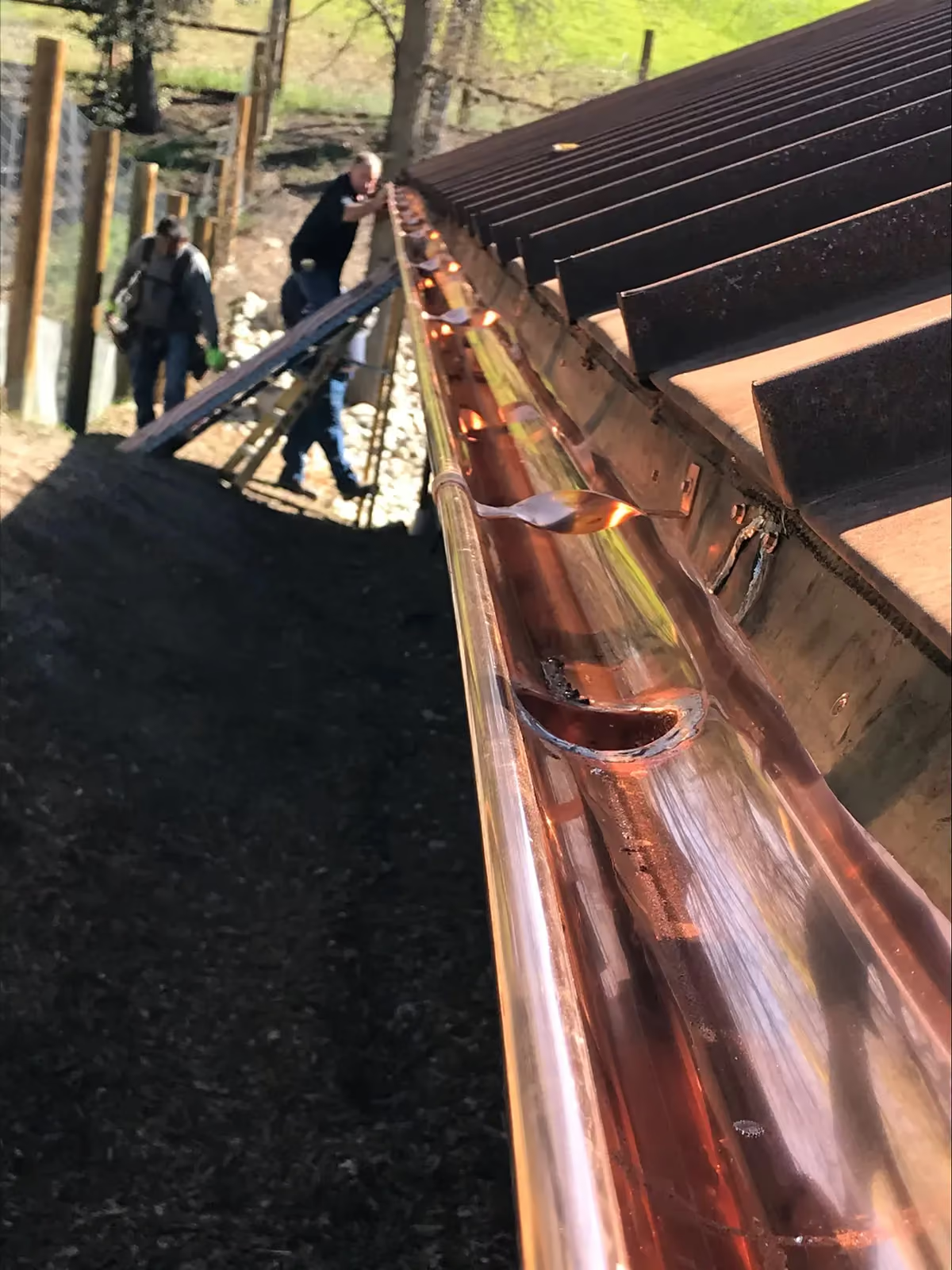
What fixes it
The service for this, and where to read more
Service
Gutter repair
Repairs for leaking joints, loose supports and sagging runs when the rest of the gutter can stay.
Service
Seamless gutter installation
We form each straight gutter run at your property and fit it to carry water toward the outlets.
Guide
Seamless or sectional gutter runs
Sectional gutters join shorter lengths along the roof edge.
Related problem
Gutter overflowing at one corner
One corner spilling while the rest of the gutter behaves is almost never a sign that the whole system is too small.
Related problem
Gutter pulling away from the house
A gutter that has dropped, tipped forward or opened a gap along the top is no longer held by its fasteners.
Questions
Asked about this problem
Can I reseal a gutter joint myself?
If it is one joint you can reach safely, yes. The old sealant has to come out completely and the metal must be clean and dry before a gutter-grade sealant goes in, or it will not bond. Sealing over the old bead, or sealing a joint that is wet, is the usual reason a home repair fails within a season.
Why does the same joint keep leaking after I seal it?
Either the joint is moving and a rigid bead cannot follow it, or it sits in standing water and the sealant never gets to cure and dry between storms. Both mean the run needs its fall checked and the joint made in a way that allows for movement, rather than another tube of sealant.
Are seamless gutters really seam free?
The straight lengths are formed in one piece on site, so there are no joints along a wall. Corners, end caps and downspout outlets are still joined, because they have to be. The difference is that a house has a handful of those instead of a joint every ten feet, and they are made once and made properly.
Free estimate
Find out what it costs
Tell us what's happening at your property, one step at a time. We'll review your request during business hours and arrange a free inspection.
What happens after you send it
- We call during business hours to set a time.
- A free visit. We measure on site and nothing is signed at the door.
- The proposed work and the price, in writing.
- (925) 555-0100Phone
- Mon–Fri 7:00 AM – 5:00 PMHours
Sat by appointment · Sun closed
100 Example Road, Brentwood, CA 94513 · office@example-roofing.demo
Your property answers are saved in this browser as you go. About saved answers.
Having trouble? Use the short form
Thanks. We will call during business hours to set up the inspection.
That did not send. Call (925) 555-0100 instead and we will take the details over the phone.